
Chemical Industry Fans are designed for demanding gas handling, process ventilation, exhaust, waste gas treatment, dust extraction, process air supply, and material conveying applications in chemical manufacturing plants.
Chemical processes may involve corrosive gases, high temperatures, high humidity, toxic substances, flammable vapors, or aggressive chemical compounds. Therefore, fan materials and construction must be selected according to the actual gas composition and operating conditions.
EMS provides customized Chemical Centrifugal Fans, Chemical Process Fans, Corrosion-Resistant Fans, FRP Fans, Stainless Steel Fans, Chemical Exhaust Fans, and explosion-proof configurations for specific hazardous-area applications.
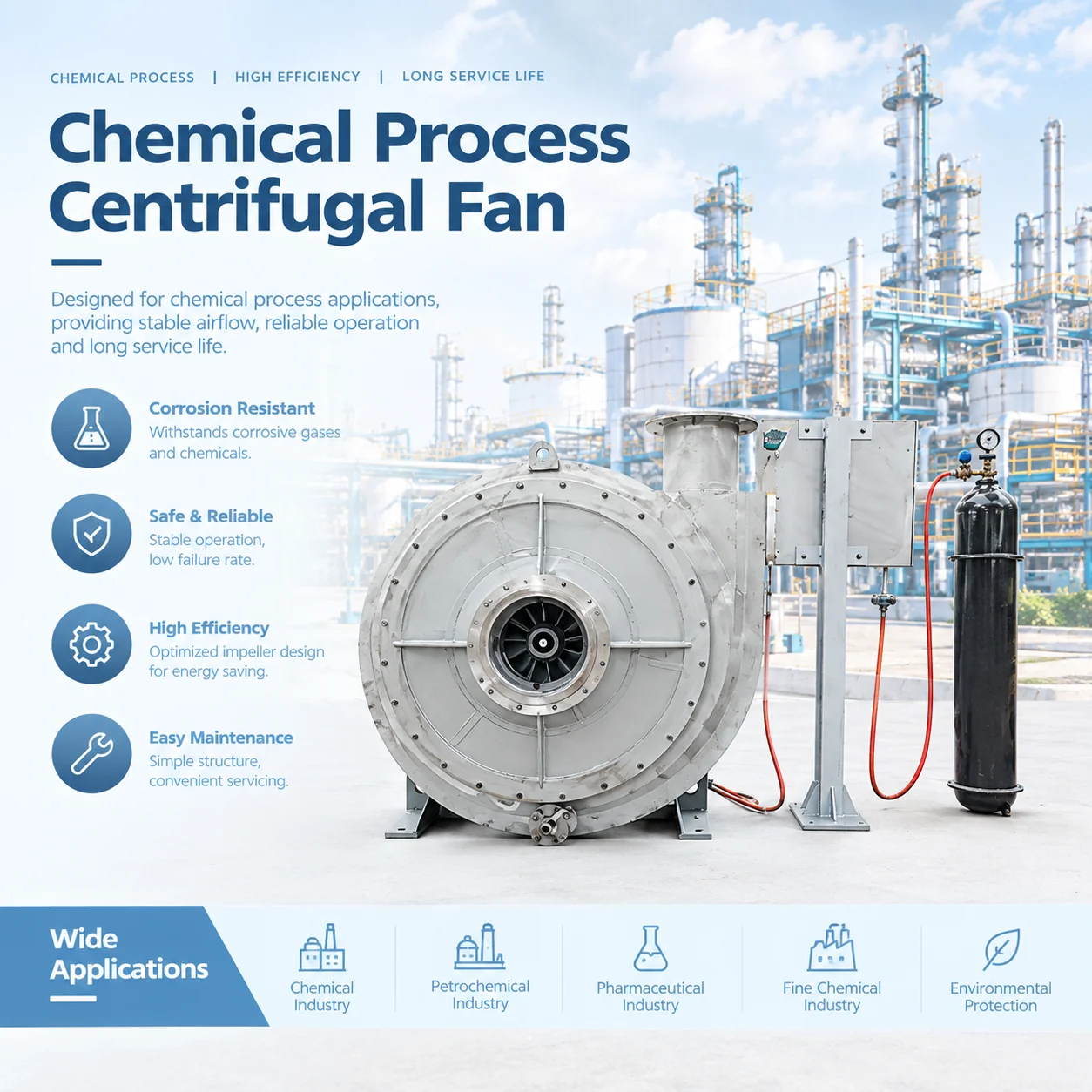
Used for process gas circulation, gas conveying, pressurization, exhaust, and air supply in chemical production systems.
Designed to extract process fumes, chemical gases, odors, and contaminated air from production equipment and chemical plant areas.
Designed for corrosive gas applications involving acidic, alkaline, saline, or other aggressive media. FRP, stainless steel, and other suitable materials can be selected according to operating conditions.
Used to convey industrial waste gases to scrubbers, absorption towers, activated-carbon systems, filters, and other environmental treatment equipment.
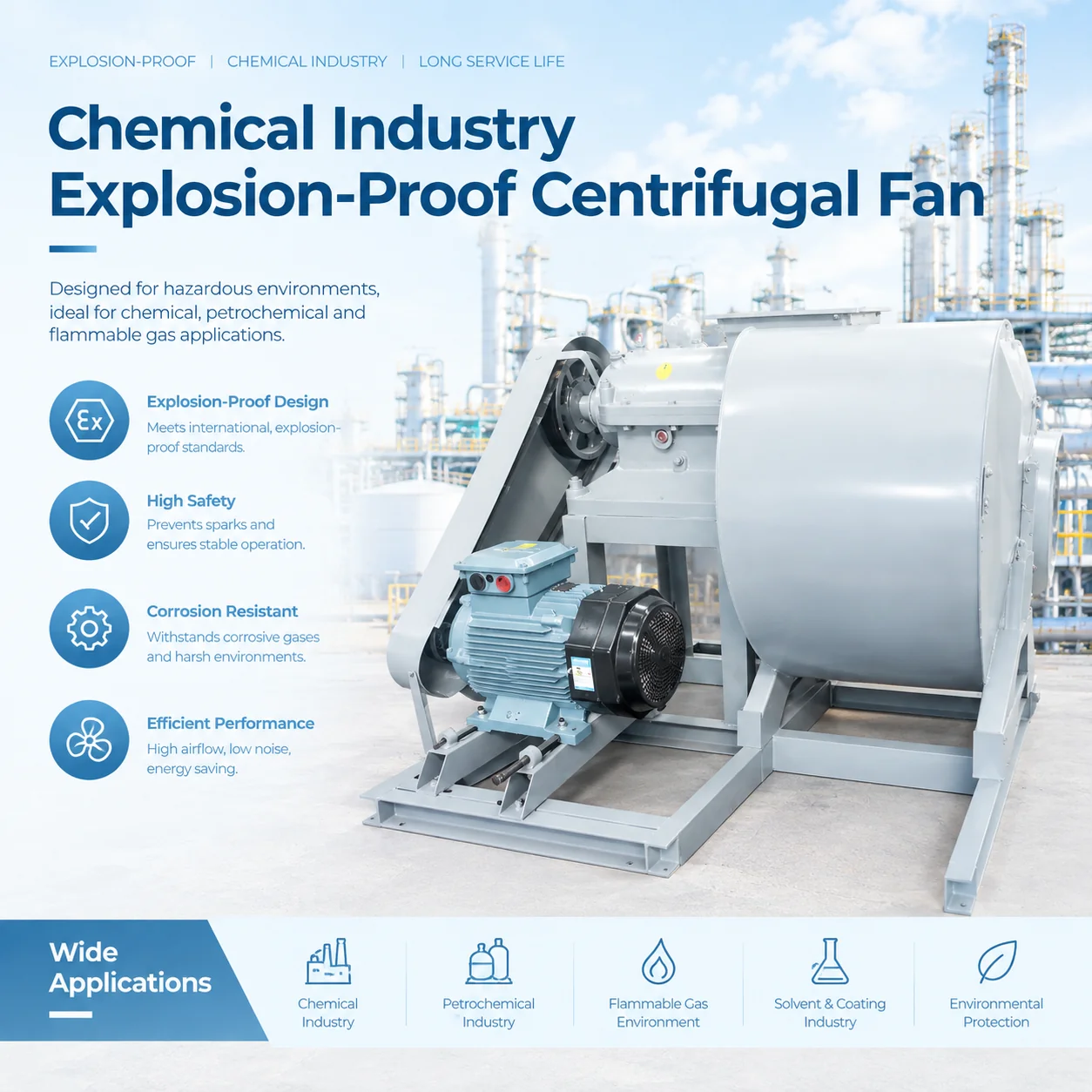
Used in applications where flammable gases or vapors may be present. Explosion-protection requirements should be selected according to the hazardous-area classification and applicable local standards.
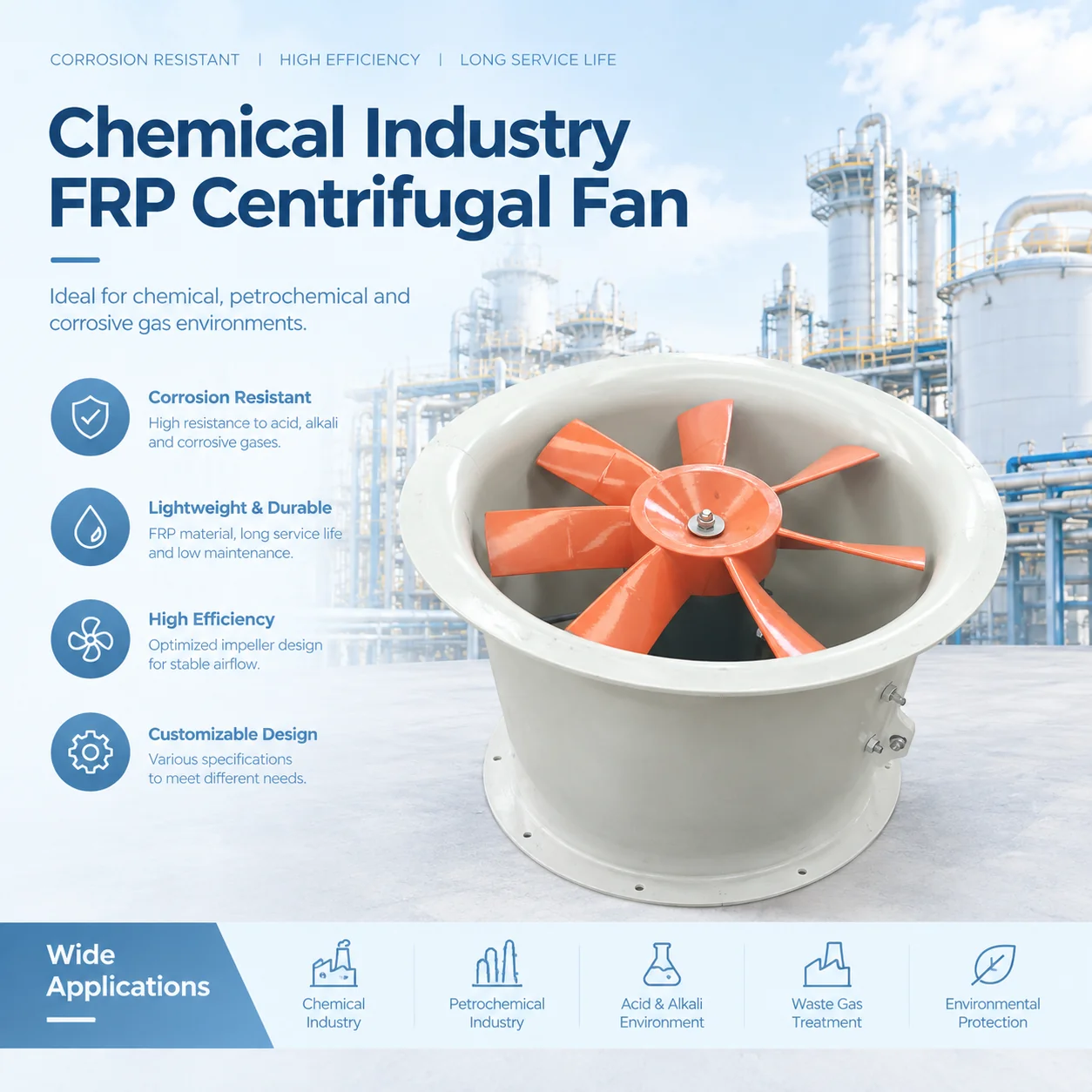
FRP centrifugal fans are suitable for many corrosive exhaust applications involving acid mist, alkaline gases, and other chemically aggressive media.
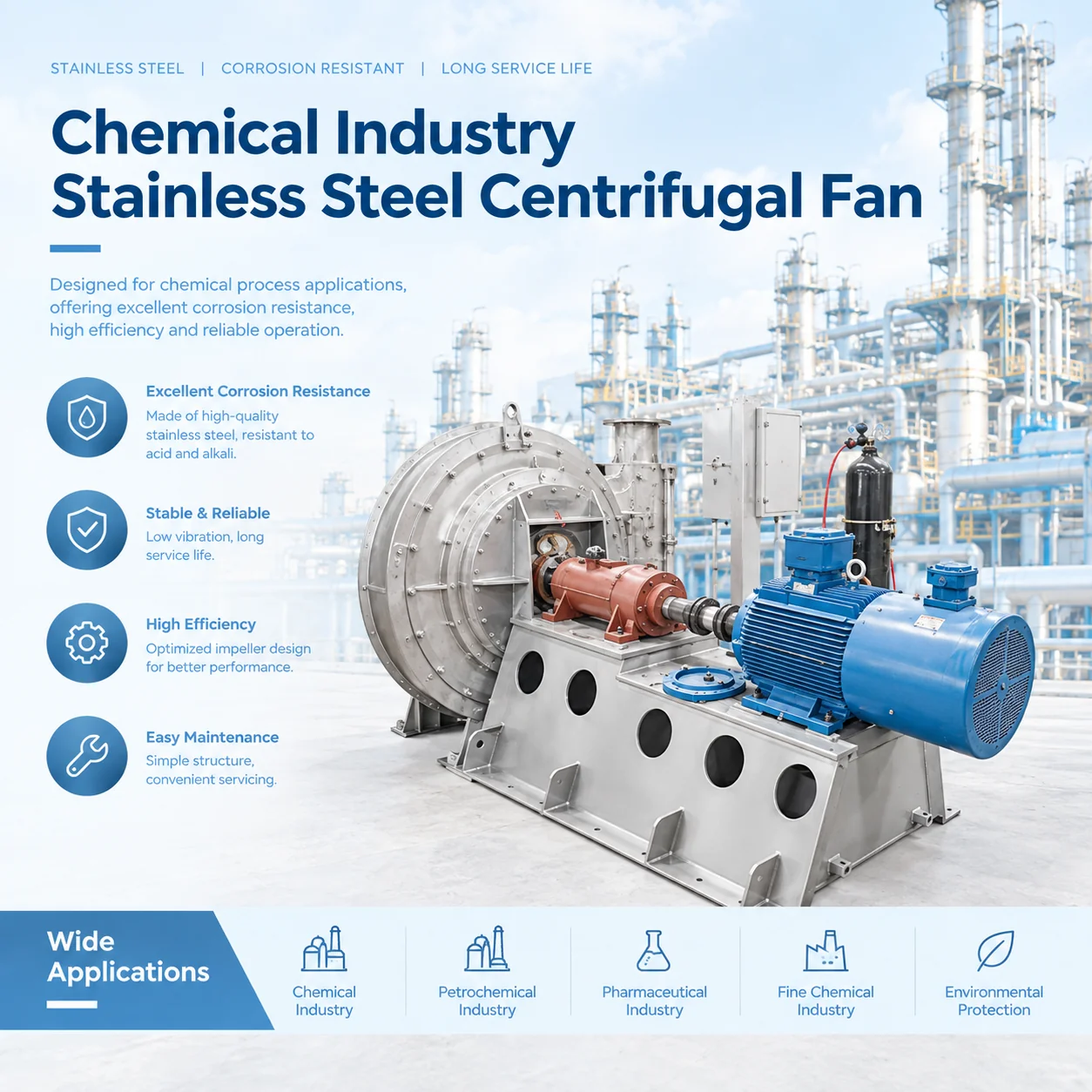
Stainless steel construction can be selected according to the chemical composition, concentration, humidity, and temperature of the handled gas.
Used for extracting and conveying powders, particles, and process dust generated during chemical manufacturing.
Designed for high-temperature process gases, thermal processing, heating systems, and other elevated-temperature chemical applications.
Designed for demanding chemical processes requiring continuous operation, robust construction, and stable airflow performance.
Chemical Process Ventilation
Chemical Gas Handling
Chemical Exhaust
Waste Gas Treatment
VOC Exhaust
Acid Gas Exhaust
Alkali Gas Exhaust
Acid Mist Extraction
Industrial Scrubber Systems
Absorption Tower Systems
Dust Collection
Process Air Supply
Chemical Plant Ventilation
Chemical Material Conveying
Chemical Manufacturing
Petrochemical Industry
Pharmaceutical Manufacturing
Fertilizer Plants
Chlor-Alkali Industry
Fine Chemical Production
Organic Chemical Production
Inorganic Chemical Production
Resin & Polymer Production
Paint & Coating Production
Battery Material Production
Industrial Waste Gas Treatment
| Parameter | Typical Range |
|---|---|
| Air Volume | 1,000–300,000 m³/h |
| Total Pressure | 500–15,000 Pa |
| Static Pressure | 300–13,000 Pa |
| Operating Temperature | -20°C to 400°C+ |
| Motor Power | 1.1–800 kW |
| Fan Speed | 500–2,900 rpm |
| Fan Efficiency | Up to 85%+ |
| Impeller Diameter | Approx. 300–3,000 mm |
| Drive Type | Direct / Belt / Coupling |
| Material | FRP / Carbon Steel / Stainless Steel / Customized |
| Installation | Horizontal / Vertical / Customized |
These are typical engineering ranges for reference. Final fan specifications depend on airflow, pressure, gas composition, temperature, corrosiveness, humidity, dust concentration, system resistance, and project requirements.
Fan materials can be selected according to acidic, alkaline, saline, solvent-containing, or other corrosive gases. FRP, stainless steel, and customized corrosion-resistant materials are available depending on the application.
Chemical waste gas fans can convey exhaust from production equipment to scrubbers, absorption towers, filtration systems, and other environmental treatment equipment.
Where flammable gases or vapors may be present, the fan system can be configured according to the hazardous-area classification, gas characteristics, and applicable safety standards.
For elevated-temperature chemical process gases, suitable materials, shaft cooling, bearing insulation, and specialized sealing arrangements can be considered according to actual temperature.
For toxic, corrosive, or irritating gases, appropriate shaft sealing and connection arrangements can be selected according to the required leakage-control conditions.
EMS can engineer and select chemical industrial fans according to:
Airflow
Static / Total Pressure
Gas Temperature
Gas Composition
Corrosive Components
Gas Humidity
Dust Concentration
Flammable Gas / Vapor
Hazardous Area Classification
Installation Space
Motor Power
Power Supply
Inlet / Outlet Direction
Rotation Direction
Material Requirements
For special chemical media, complete information about gas composition, concentration, temperature, and humidity should be provided to determine the appropriate fan material and construction.
Explore the main EMS product configurations supplied for this industry.