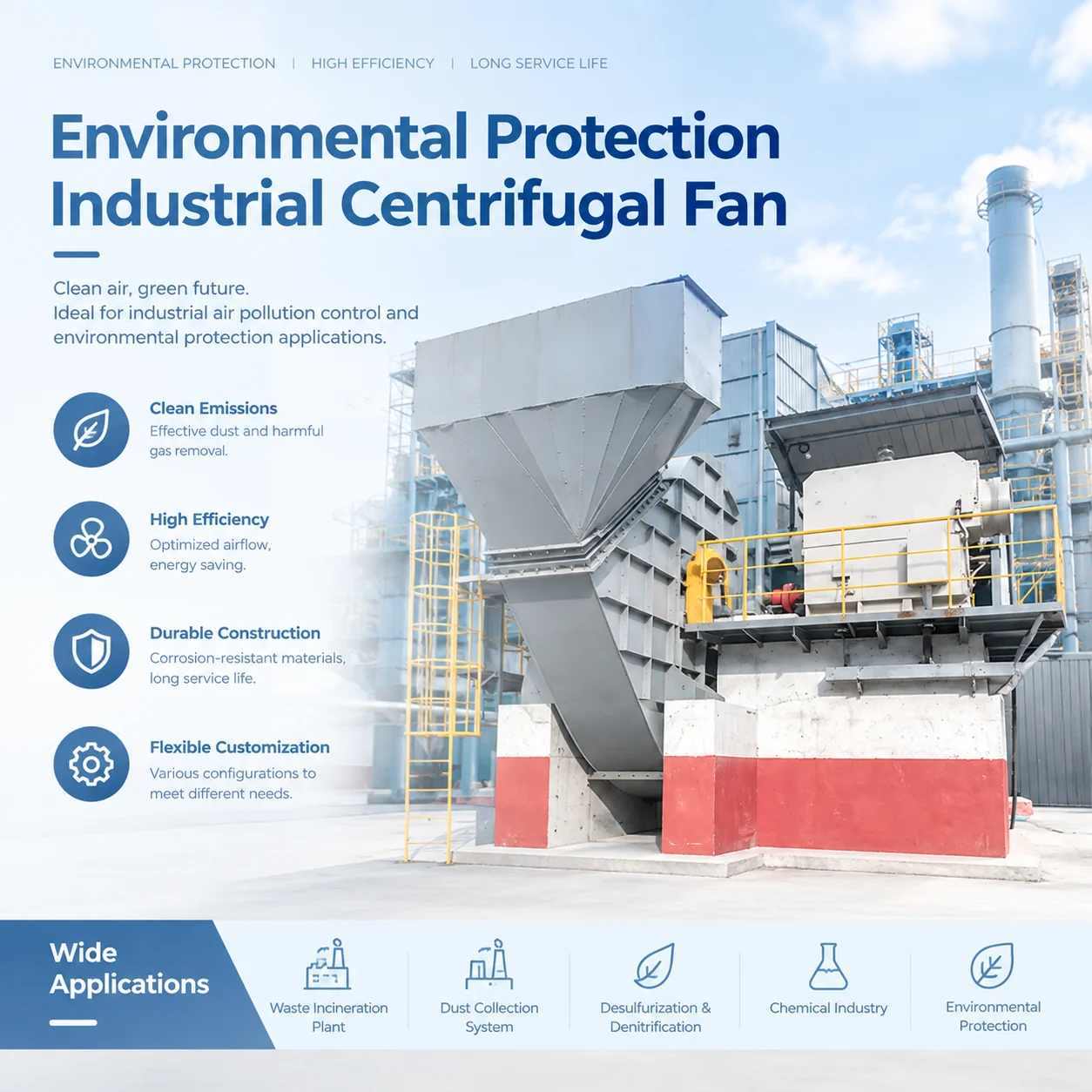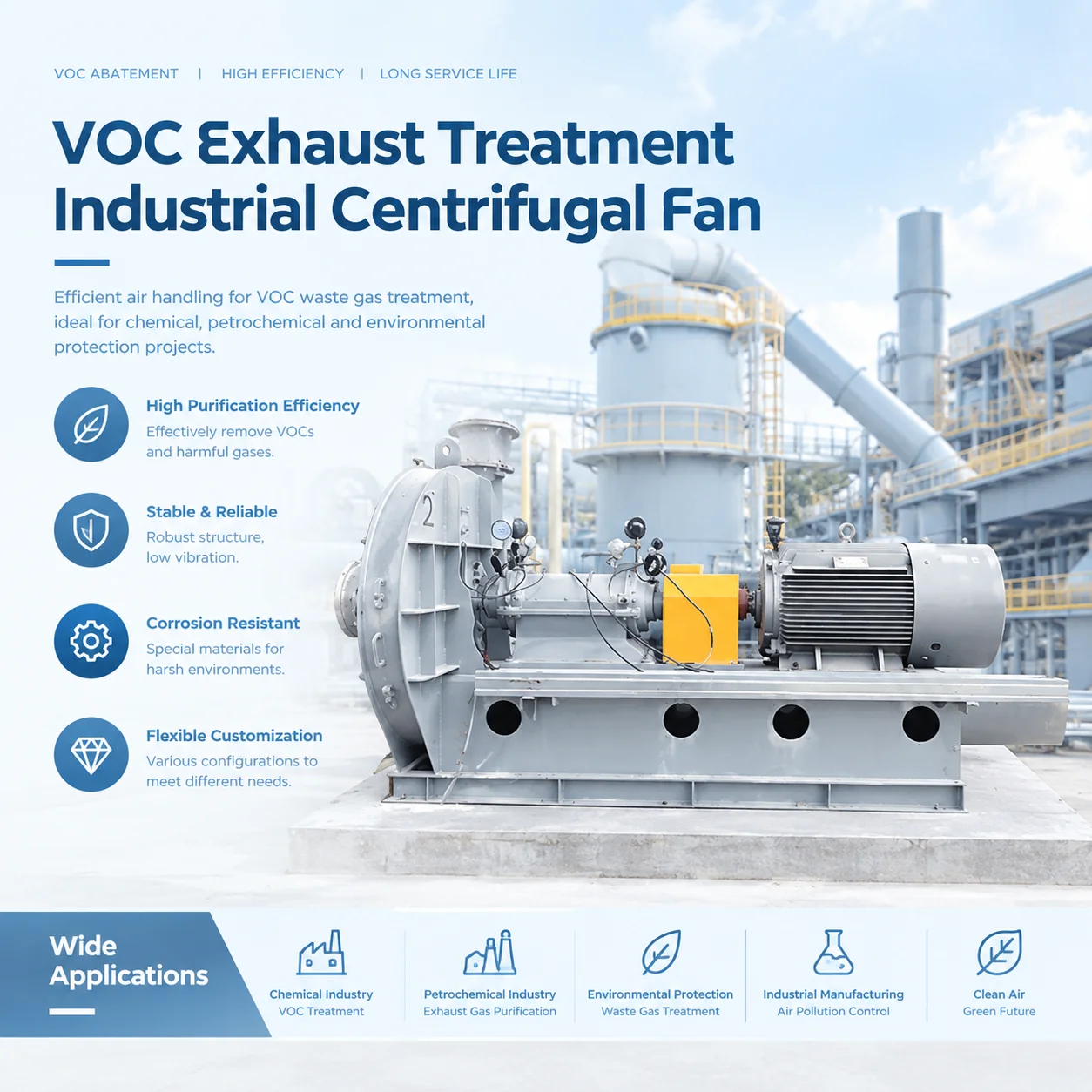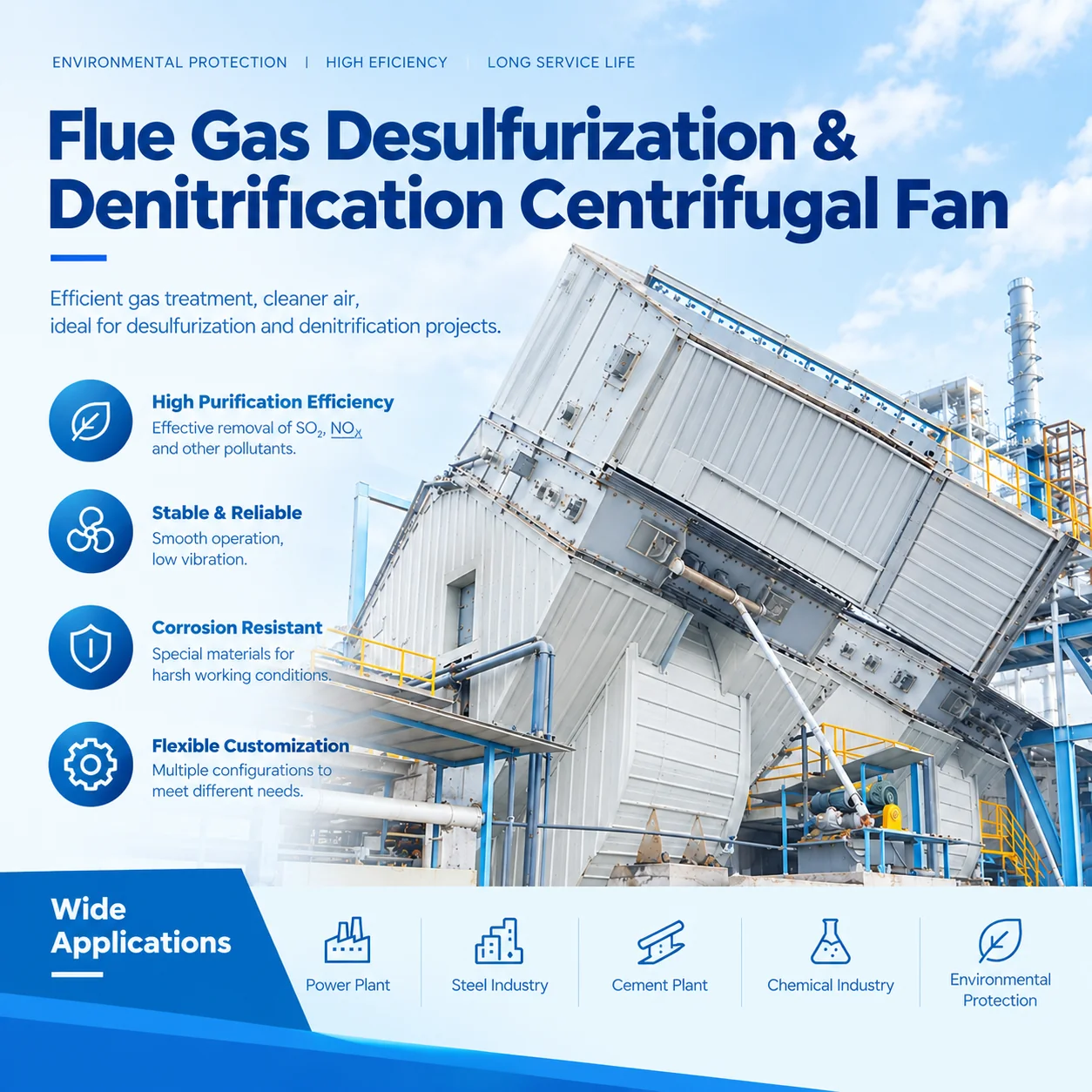

Environmental Protection Centrifugal Fans are industrial air-handling fans designed for waste gas exhaust, VOC gas treatment, dust extraction, flue gas handling, scrubber systems, desulfurization, denitrification, baghouse dust collection, and other industrial environmental protection applications.
EMS provides a complete range of industrial centrifugal fans, corrosion-resistant fans, high-temperature fans, dust extraction fans, explosion-resistant configurations, and heavy-duty environmental fans. Fan construction can be customized according to airflow, pressure, gas temperature, gas composition, dust concentration, corrosion level, and operating conditions.
These fans are widely used in steel, cement, chemical, paper, glass, waste incineration, food processing, wood processing, mining, and other industries.
Used to collect, transport, and discharge industrial process exhaust and contaminated air.
Designed for dust extraction and air transportation in baghouse, cyclone, and centralized dust collection systems.
Suitable for transporting dust-laden air from industrial production processes.
Used for the collection and transportation of VOC and organic waste gases in industrial exhaust treatment systems.
Used with wet scrubbers, absorption towers, and other gas treatment equipment.
Designed for industrial flue gas desulfurization systems, including absorption and flue gas circulation applications.
Used in industrial flue gas denitrification and related gas treatment systems.
Designed for high-temperature flue gas, furnace exhaust, incineration, and thermal process applications.
Suitable for acidic, alkaline, humid, and other corrosive gas streams.
Designed for large-scale environmental systems requiring continuous operation under demanding industrial conditions.
EMS Environmental Protection Centrifugal Fans are suitable for:
Industrial Waste Gas Treatment
VOC Exhaust Systems
Dust Collection Systems
Baghouse Dust Collectors
Cyclone Dust Collectors
Scrubber Systems
Absorption Towers
Desulfurization Systems
Denitrification Systems
Industrial Flue Gas Treatment
Furnace Exhaust
Waste Incineration
Boiler Flue Gas Exhaust
Workshop Environmental Exhaust
Odor Control Systems
Typical applications include:
Steel & Metallurgy
Cement Plants
Chemical Plants
Paper Mills
Glass Manufacturing
Waste Incineration Plants
Wood Processing
Food Processing
Mining & Mineral Processing
| Parameter | Typical Range |
|---|---|
| Airflow | 1,000–500,000 m³/h |
| Total Pressure | 500–20,000 Pa |
| Static Pressure | 300–18,000 Pa |
| Gas Temperature | -20°C to 500°C+ |
| Motor Power | 1.1–1,000 kW |
| Fan Speed | 500–2,900 rpm |
| Fan Efficiency | Up to 85%+ |
| Impeller Diameter | 300–3,000 mm |
| Drive Type | Direct / Belt / Coupling |
| Fan Material | Carbon Steel / Stainless Steel / FRP / Wear-Resistant Steel |
| Operation | Continuous / Heavy-Duty |
| Installation | Horizontal / Vertical / Customized |
The above values are typical engineering reference ranges. Final specifications should be determined according to the actual airflow, system resistance, gas temperature, gas composition, dust concentration, corrosion conditions, and installation requirements.
Fan performance can be engineered according to system resistance, ductwork requirements, treatment equipment, and required airflow.
Stainless steel, FRP, and other corrosion-resistant configurations can be selected for acidic, alkaline, humid, or chemically aggressive gases.
For abrasive dust-laden air, wear-resistant impellers, liners, and reinforced housings can be configured.
For boiler, furnace, and incineration applications, high-temperature materials, shaft cooling, and bearing protection can be incorporated according to actual operating conditions.
Appropriate shaft sealing and housing arrangements can be selected where environmental systems require controlled leakage.
Available configurations include:
Direct Drive
Belt Drive
Coupling Drive
A typical environmental exhaust system can be arranged as:
Industrial Process → Exhaust Hood → Duct → Dust Collector / Scrubber → Centrifugal Fan → Treatment System / Stack
Fans may be installed:
Upstream of dust collectors
Downstream of dust collectors
Before or after scrubbers
In absorption tower systems
In desulfurization systems
In VOC treatment systems
In boiler flue gas systems
In furnace exhaust systems
In centralized industrial exhaust systems
The final fan location should be determined according to system pressure, gas temperature, equipment arrangement, and process requirements.
EMS can configure environmental centrifugal fans according to:
Airflow
Static Pressure / Total Pressure
Gas Temperature
Gas Composition
Dust Concentration
Corrosive Components
Moisture Content
Required Material
Installation Space
Motor Voltage and Frequency
Continuous Operating Conditions
Available customized configurations may include:
Stainless Steel Construction
FRP Construction
Wear-Resistant Impeller
High-Temperature Construction
Explosion-Proof Motor Configuration
Corrosion-Resistant Components
Special Shaft Sealing
Customized Inlet / Outlet Arrangement
Explore the main EMS product configurations supplied for this industry.