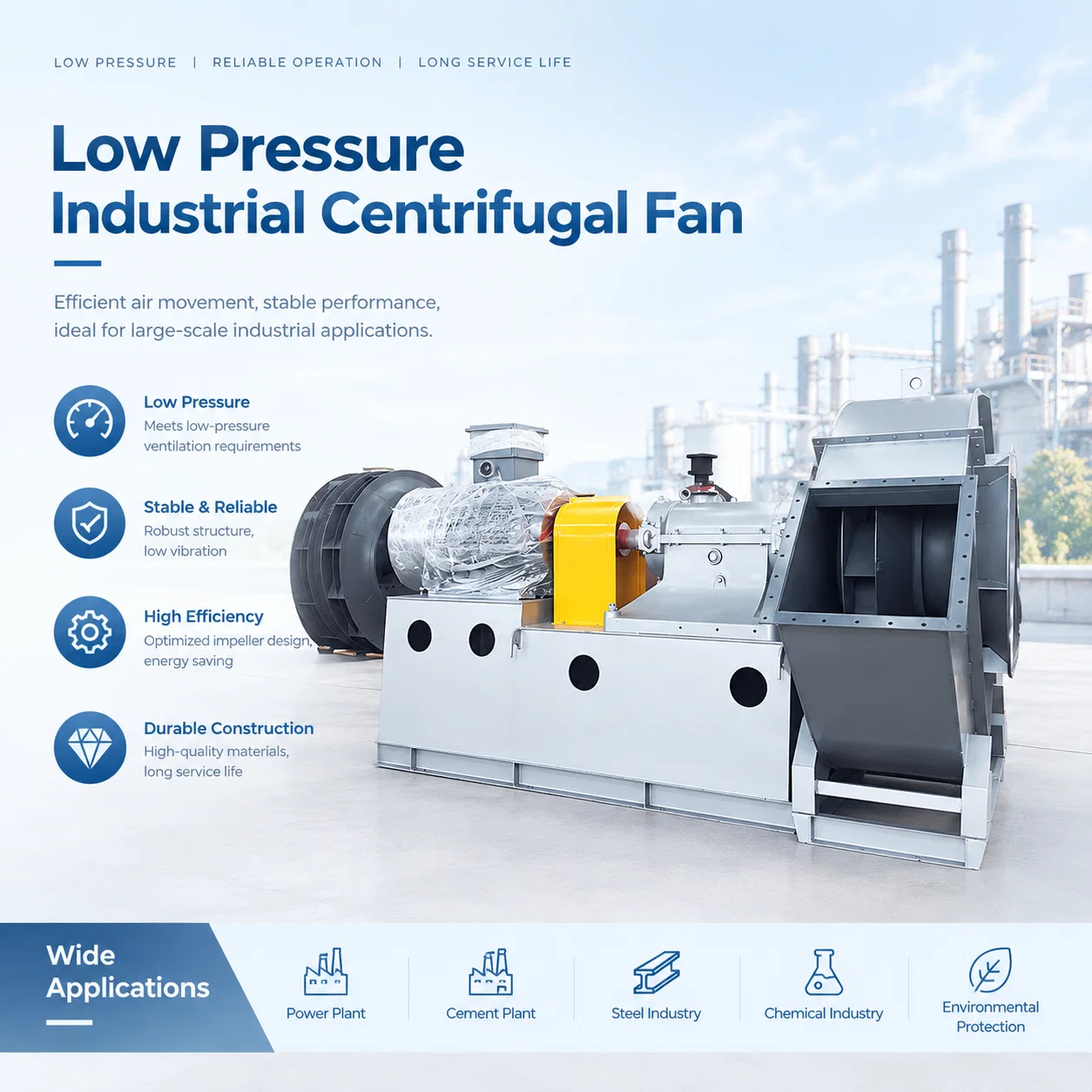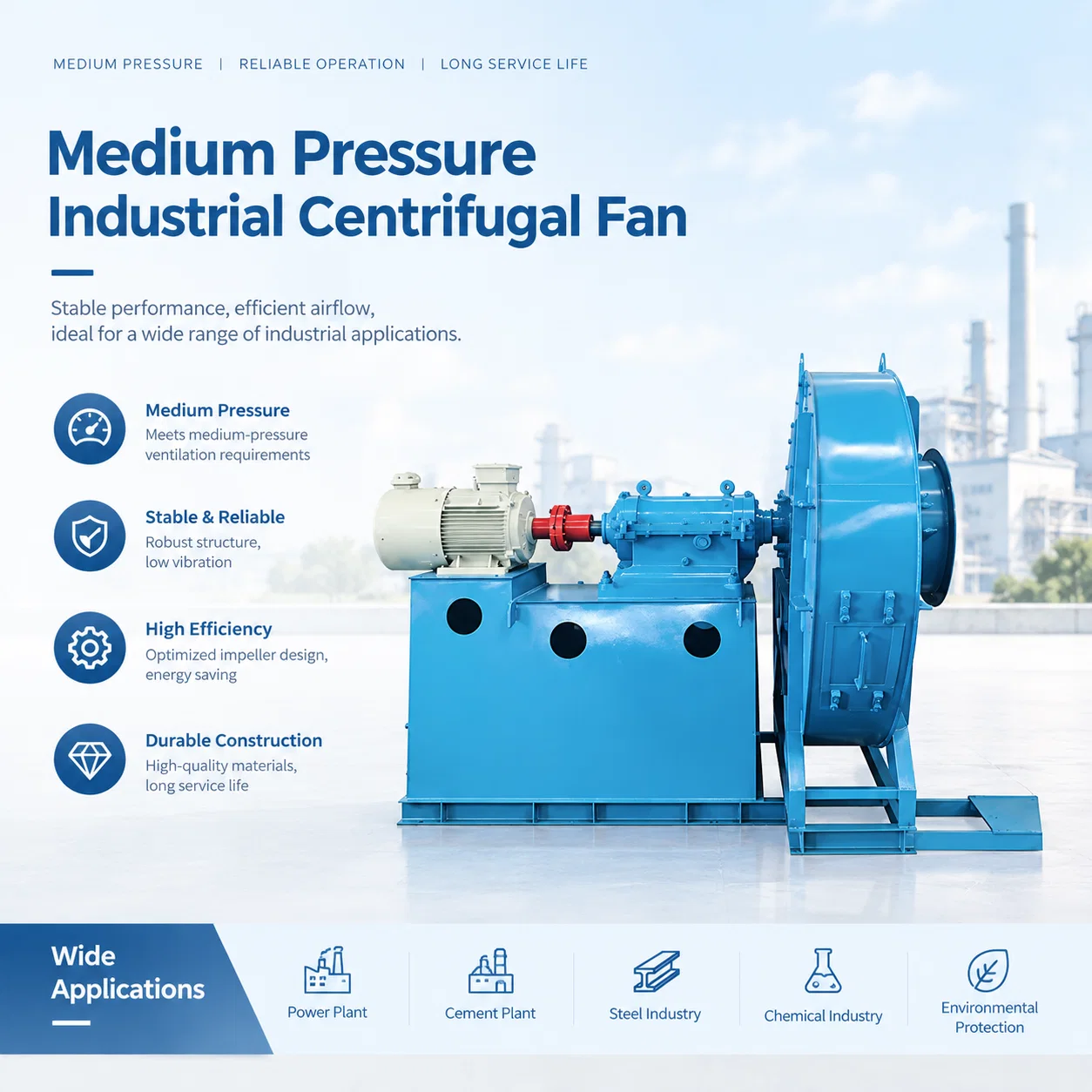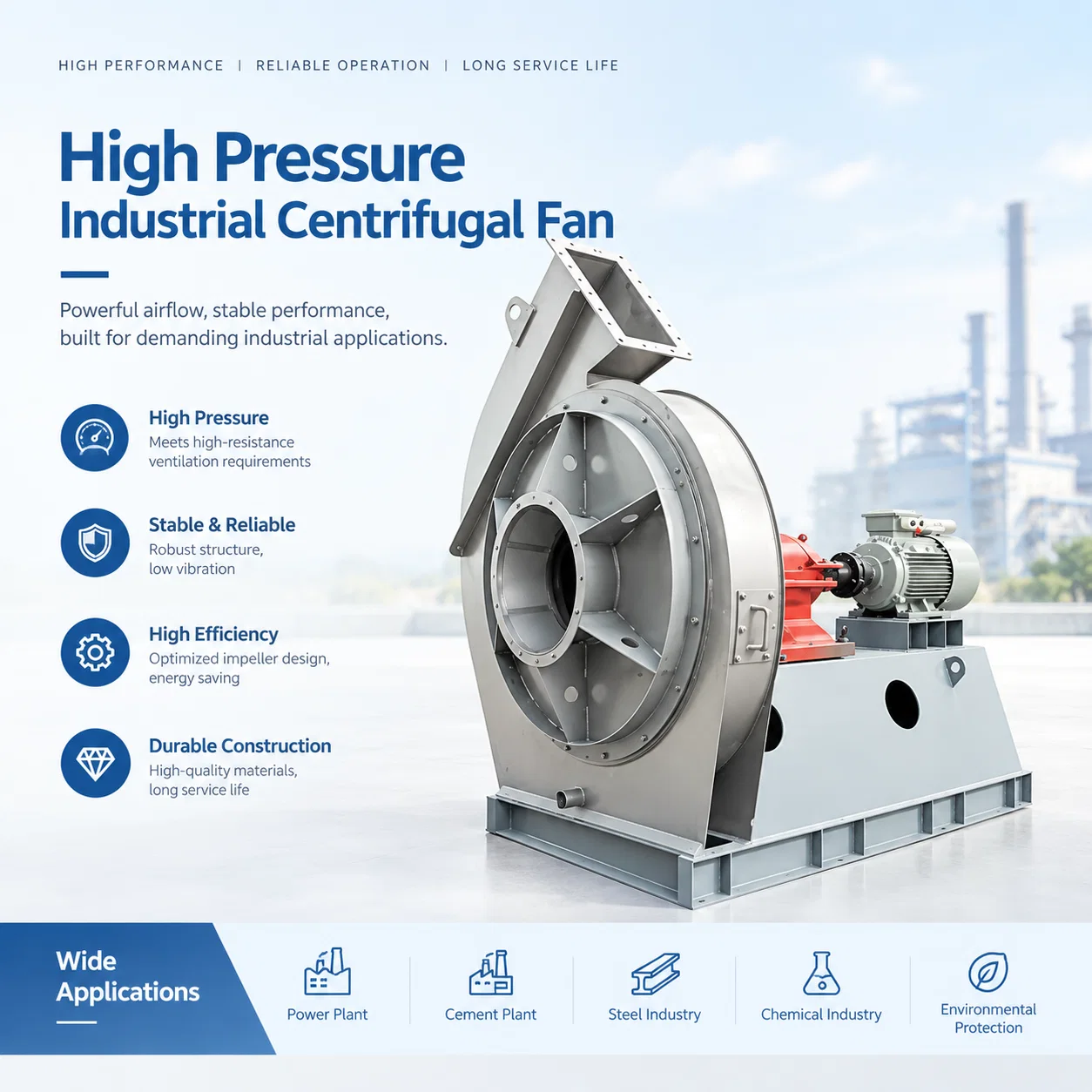

Heavy-Duty Centrifugal Fans are engineered for demanding industrial applications that require high airflow, high pressure, continuous operation, and reliable performance under harsh working conditions.
EMS manufactures customized heavy-duty industrial centrifugal fans for applications involving high temperatures, heavy dust loads, abrasive particles, corrosive gases, and demanding process conditions. Fan construction, impeller design, materials, bearings, drive systems, and cooling arrangements can be selected according to the actual operating requirements.
These industrial fans are widely used in cement plants, steel mills, metallurgical plants, mining operations, chemical plants, paper mills, glass manufacturing, boilers, waste incineration, and environmental protection systems.
Heavy-Duty Industrial Exhaust Fan
Heavy-Duty ID Fan
Heavy-Duty Dust Extraction Fan
Heavy-Duty Industrial Blower
High-Pressure Centrifugal Fan
High-Temperature Centrifugal Fan
Furnace Exhaust Fan
Boiler ID Fan
Cement Kiln ID Fan
Steel Mill Exhaust Fan
Industrial Process Fan
Flue Gas Exhaust Fan
Heavy-Duty Dust Collection Fan
Mining Ventilation Fan
Waste Incineration Fan
Used for cement kiln exhaust, clinker cooling, cement mill ventilation, raw mill systems, dust collection, and process exhaust.
Suitable for furnace exhaust, sintering systems, dust extraction, flue gas handling, forced draft, and high-temperature industrial processes.
Used for mine ventilation, mineral processing, crushing and screening dust extraction, and heavy-duty industrial ventilation.
Applied to process gas handling, chemical exhaust, corrosive gas extraction, industrial ventilation, and waste gas treatment.
Used in boiler systems, paper machine ventilation, drying systems, exhaust systems, dust collection, and process air applications.
Suitable for glass furnace exhaust, combustion air supply, flue gas extraction, mold cooling, and production-line ventilation.
Used for waste incinerator ID systems, combustion air, flue gas exhaust, dust collection, gas treatment, and high-temperature exhaust applications.
| Parameter | Typical Range |
|---|---|
| Air Volume | 2,000–500,000 m³/h |
| Total Pressure | 1,000–20,000 Pa |
| Static Pressure | 800–18,000 Pa |
| Operating Temperature | -20°C to 500°C+ |
| Motor Power | 2.2–1,000 kW |
| Fan Speed | 500–2,900 rpm |
| Fan Efficiency | Up to 85%+ |
| Impeller Diameter | Approx. 400–3,000 mm |
| Drive Type | Direct / Coupling / Belt Drive |
| Rotation Direction | CW / CCW |
| Material | Carbon Steel / Stainless Steel / Wear-Resistant Steel |
| Installation | Horizontal / Vertical / Customized |
Technical ranges are provided for general engineering reference. Final specifications depend on the required airflow, pressure, gas temperature, gas composition, dust concentration, system resistance, and operating conditions.
The impeller can be designed with reinforced blades and structural components for high-load and continuous-duty applications. Dynamic balancing helps maintain stable operation.
The fan casing can be reinforced according to operating pressure and structural load requirements, improving rigidity and long-term operating reliability.
Heavy-duty bearings and bearing housings can be selected according to shaft load, fan speed, operating hours, and installation requirements. Independent bearing housings and lubrication systems are available for demanding applications.
For abrasive dust and high-particle-load applications, wear-resistant steel, reinforced impellers, protective liners, and replaceable wear components can be incorporated into the fan design.
For boilers, furnaces, kilns, incinerators, and metallurgical processes, the fan can be configured with high-temperature materials, shaft cooling, bearing insulation, heat shields, and expansion compensation according to actual gas temperature.
For corrosive or chemically aggressive gases, stainless steel and other suitable materials can be selected according to the gas composition, concentration, humidity, and operating temperature.
For continuous industrial operation, regular inspection is recommended for:
Impeller wear and dust accumulation
Bearing temperature and lubrication
Motor current and operating load
Coupling or belt condition
Fan vibration and noise
Casing and welded joints
Inlet and outlet ductwork
Cooling and insulation components on high-temperature fans
Maintenance intervals should be determined according to actual gas conditions, dust concentration, temperature, operating hours, and application requirements.
Heavy-Duty Centrifugal Fans are normally selected according to the actual system duty point rather than a single standard specification.
EMS can engineer the fan according to:
Required Airflow
Required Pressure
Gas Temperature
Gas Composition
Dust Concentration
Particle Characteristics
Corrosive Gas Content
Continuous Operating Requirements
Installation Space
Motor Power
Power Supply
Inlet / Outlet Direction
Rotation Direction
Material Requirements
Explore the main EMS product configurations supplied for this industry.