
Textile Mill Centrifugal Fans are designed for ventilation, exhaust, drying, hot air circulation, dust extraction, material conveying, and waste gas handling in textile manufacturing facilities.
EMS supplies industrial centrifugal fans for spinning mills, weaving factories, knitting plants, dyeing and printing facilities, textile finishing lines, fiber processing plants, and textile drying systems.
The fan can be engineered according to airflow, pressure, temperature, gas composition, humidity, dust or fiber concentration, installation conditions, and continuous operating requirements.
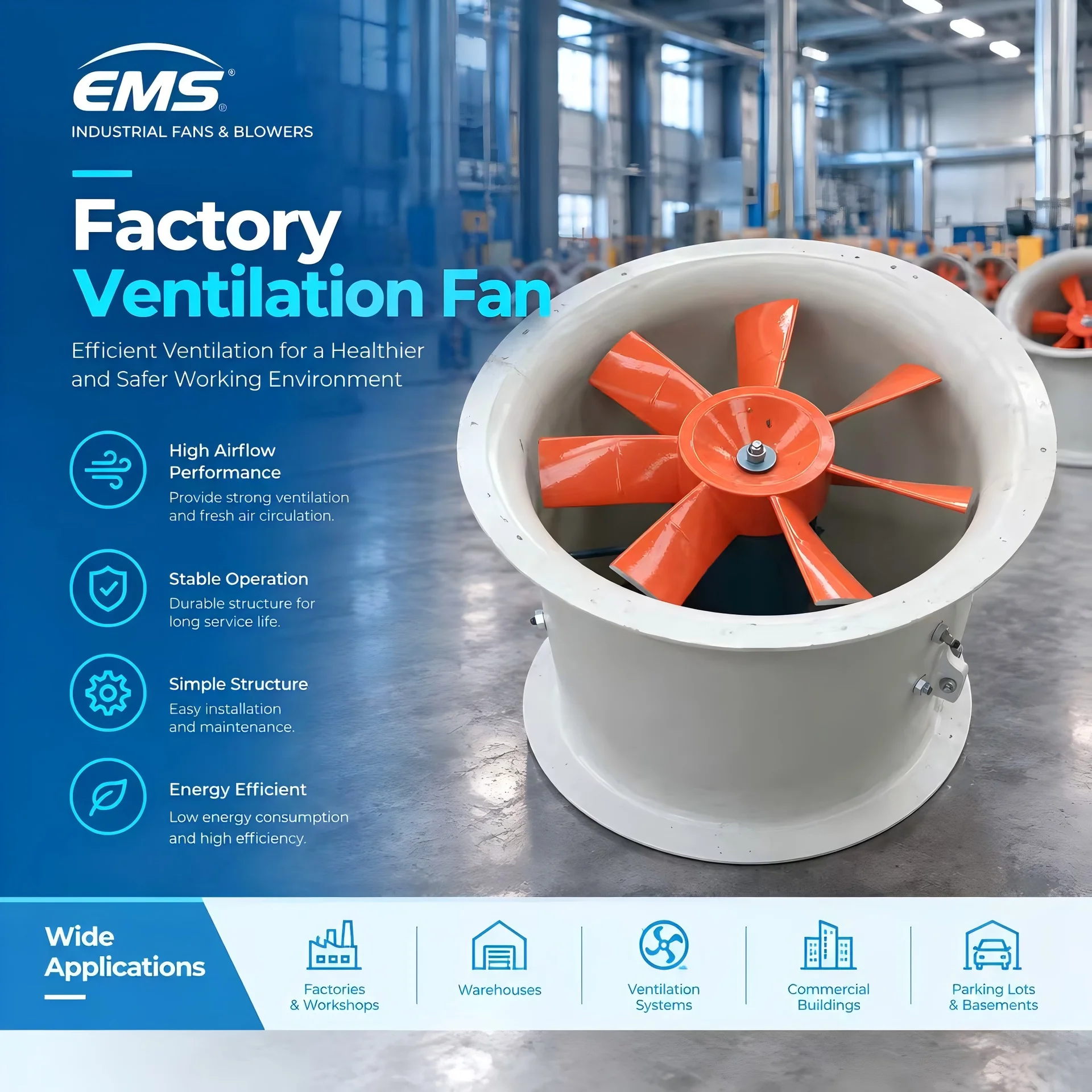
Used for workshop ventilation, air circulation, heat removal, and process ventilation in textile manufacturing facilities.
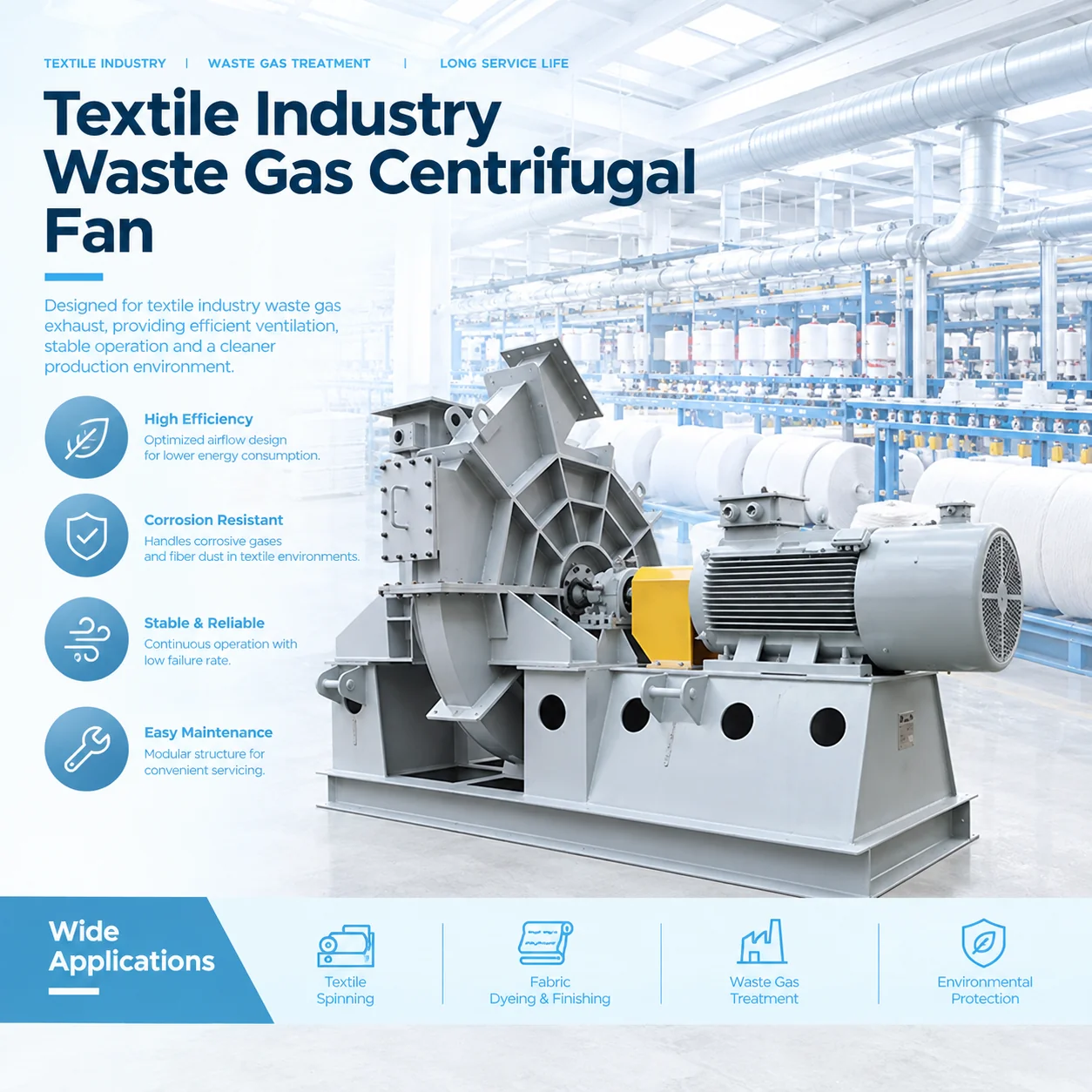
Designed to remove hot air, humid air, process fumes, odors, and exhaust gases generated during textile production.
Used to convey process exhaust from dyeing, printing, finishing, and other textile production processes to waste gas treatment systems.
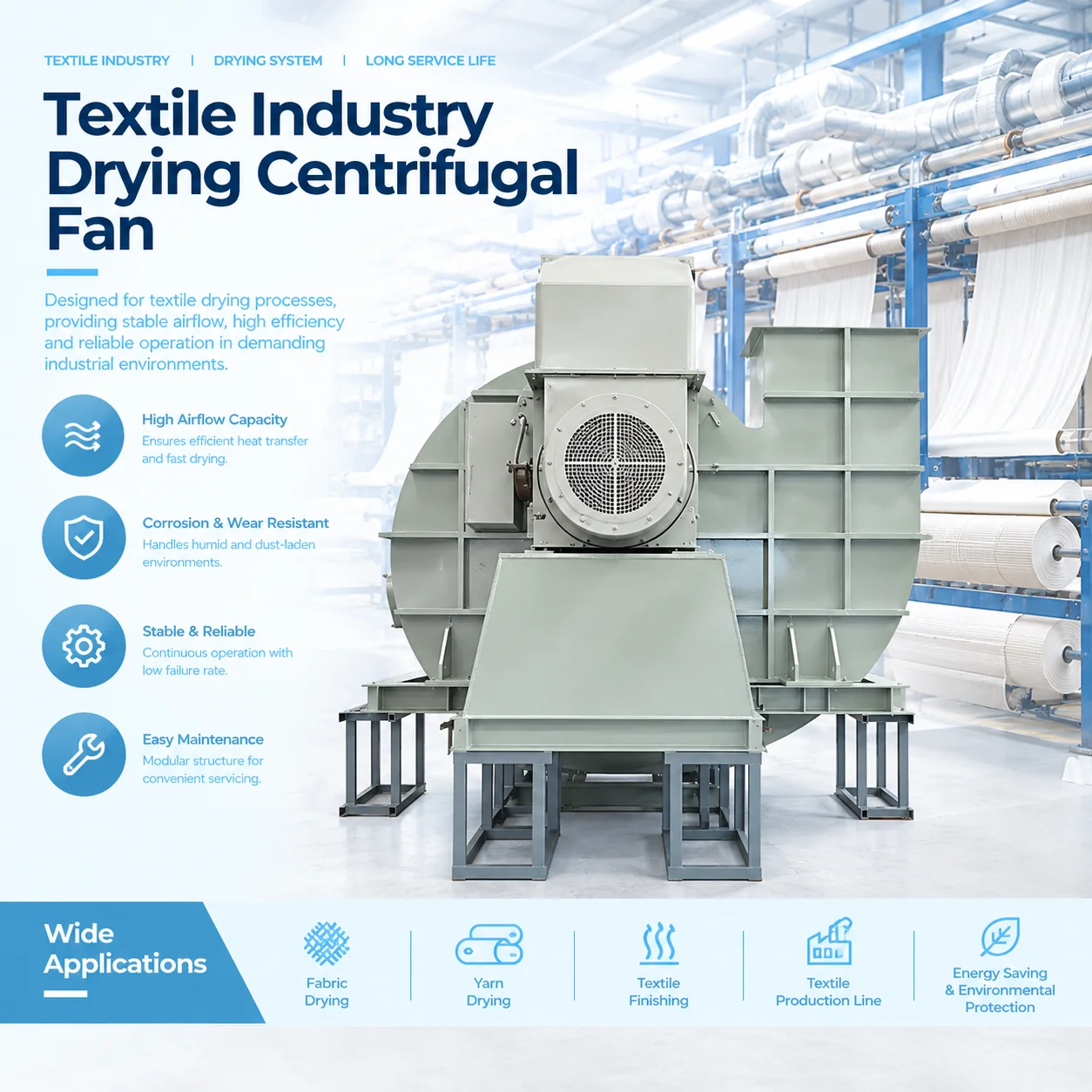
Provide stable airflow for fabric drying, yarn drying, textile drying ovens, and other industrial drying processes.
Used in heat-setting, drying, and thermal processing systems where controlled hot air circulation is required.
Designed for extracting cotton dust, textile fibers, lint, fluff, and other airborne particles from production equipment and dust collection systems.
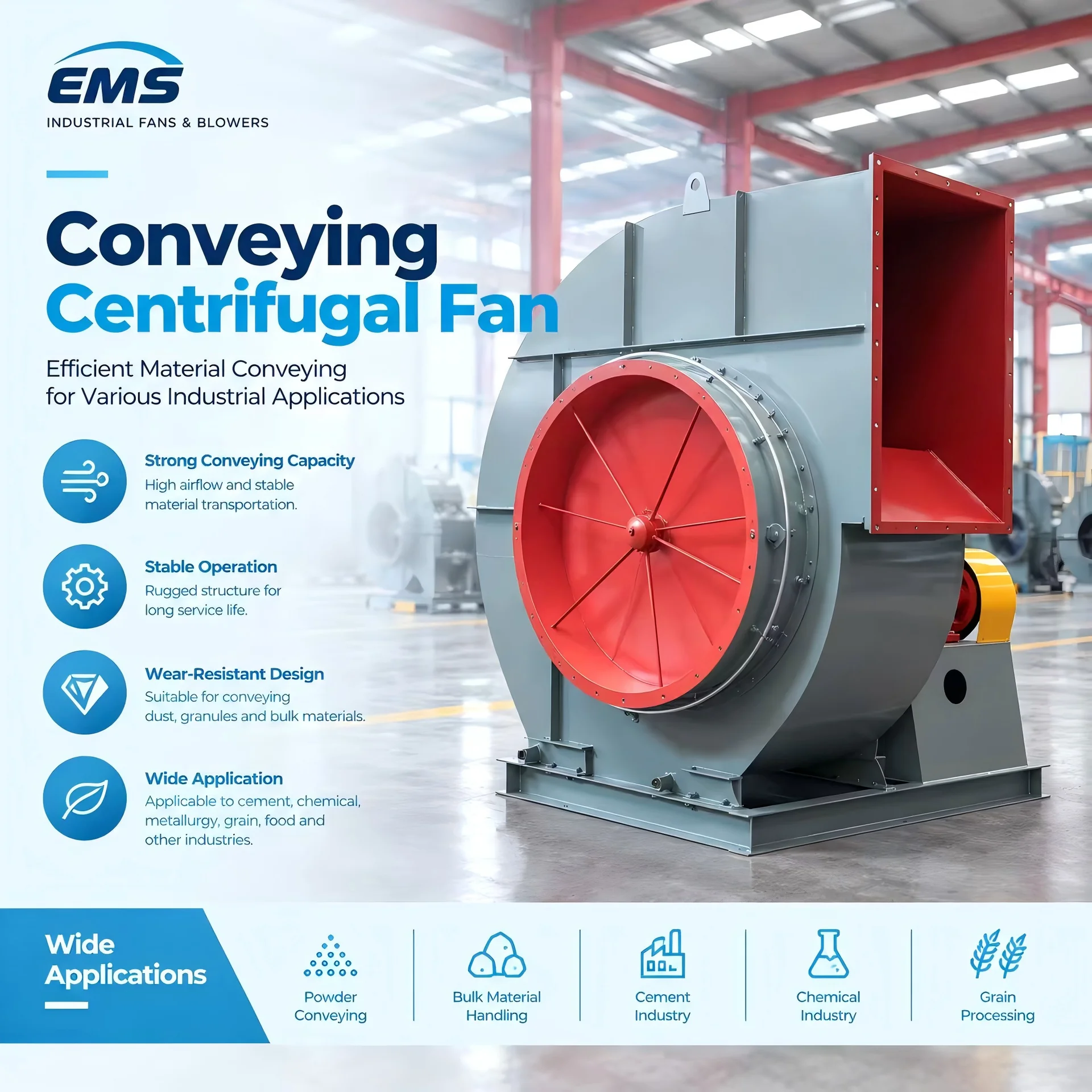
Used for pneumatic conveying of lightweight textile fibers, short fibers, waste yarn, and other process materials.
Spinning
Weaving
Knitting
Dyeing
Printing
Textile Finishing
Fabric Drying
Yarn Drying
Heat Setting
Fiber Processing
Textile Waste Gas Treatment
Textile Dust Collection
Workshop Ventilation
| Parameter | Typical Range |
|---|---|
| Air Volume | 1,000–200,000 m³/h |
| Total Pressure | 500–8,000 Pa |
| Static Pressure | 300–7,000 Pa |
| Operating Temperature | -20°C to 300°C |
| Motor Power | 1.1–500 kW |
| Fan Speed | 500–2,900 rpm |
| Fan Efficiency | Up to 85%+ |
| Impeller Diameter | Approx. 300–2,500 mm |
| Drive Type | Direct / Belt / Coupling |
| Material | Carbon Steel / Stainless Steel / Customized |
| Installation | Horizontal / Vertical / Customized |
The above ranges are typical engineering references. Final specifications should be selected according to the actual airflow, pressure, temperature, gas composition, humidity, dust or fiber concentration, and system resistance.
Textile production lines often operate for extended periods. Fan components can therefore be selected and engineered for continuous-duty operation.
For applications involving cotton dust, lint, fibers, and textile particles, impeller and inlet configurations can be optimized to reduce fiber accumulation and maintain stable airflow.
For textile drying and heat-setting systems, the fan can be configured for elevated-temperature operation with suitable materials, shaft cooling, bearing protection, and thermal insulation where required.
For textile exhaust containing moisture, chemicals, or process emissions, materials, sealing systems, and surface treatments can be selected according to the actual gas conditions.
Impeller balancing and structural optimization help provide stable operation under continuous industrial service.
Textile Spinning Mills
Weaving Factories
Knitting Mills
Dyeing Plants
Textile Printing Plants
Textile Finishing Plants
Fiber Processing Plants
Yarn Manufacturing Plants
Fabric Drying Lines
Textile Heat Setting Lines
Textile Waste Gas Treatment Systems
Textile Dust Collection Systems
EMS can select and customize the centrifugal fan according to:
Airflow
Pressure
Gas Temperature
Gas Composition
Humidity
Dust / Fiber Concentration
Installation Dimensions
Motor Power
Power Supply
Inlet / Outlet Direction
Rotation Direction
Material Requirements
Continuous Operating Time
Different fan materials, drive configurations, pressure levels, and temperature designs can be provided for specific textile production processes.
Explore the main EMS product configurations supplied for this industry.